Yoga for Stress
and Overwhelm
Stress is not a mindset problem. It lives in the body — in the nervous system, in held tension, in a system that has lost its capacity to settle. The right yoga practice works with that reality, not around it.
Somatic yoga for people dealing with stress and overwhelm — Copenhagen and Malmö.
Stress is not a thought.
It is a state.
When we are stressed, the nervous system is in a state of activation. This is not a problem — it is the body doing exactly what it evolved to do. The problem comes when that activation becomes chronic: when the system cannot find its way back to rest, and when every small demand becomes one more weight on a system that is already at capacity.
Thinking your way out of this state rarely works, because the state is not primarily cognitive. It is physiological. The nervous system needs to be worked with directly — through the body, through the breath, through practices that give the system permission to settle.
This is where somatic yoga is not just useful but specifically designed for the problem. Not yoga as another task on the list. Yoga as a direct, physiological intervention in the state that is causing the suffering.
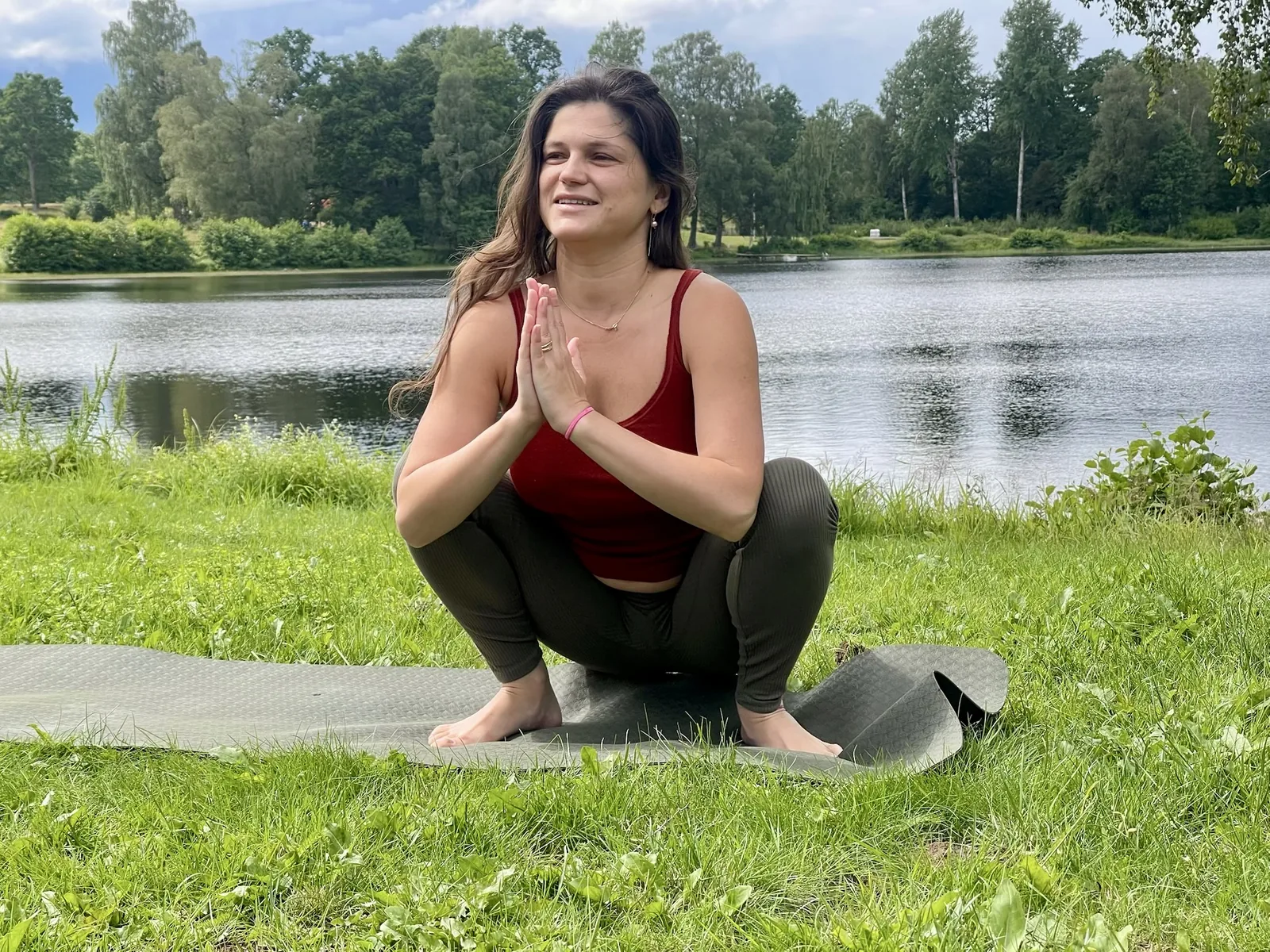
“The body is the most easy way to start working with power, balance and flexibility — afterwards we can use this knowledge in other ways.”
What the practice does
for a stressed nervous system
Breathwork for the Nervous System
Specific pranayama practices activate the parasympathetic nervous system — shifting the body out of the stress response and into a state where rest and recovery become possible.
Movement That Discharges Tension
Stress accumulates in the body as held tension. Somatic movement creates conditions for that tension to discharge — not by forcing relaxation, but by giving the nervous system a safe context to let go.
Learning to Feel the State
One of the most important skills for stress: being able to notice your own state early enough to respond to it. The practice builds this capacity — inner awareness as the foundation for regulation.
Deep Rest Practice
A guided practice that brings the body into a state of complete physiological rest while the mind remains gently aware — neither fully asleep nor actively thinking. For chronically stressed systems, this is often the most restorative practice available.
Meditation for Overwhelm
Overwhelm is often the result of losing perspective — of being so inside a situation that it fills the entire field. Meditation builds the capacity to observe, to step back, to find the distance that makes response possible.
Expanding the Window of Tolerance
Over time, consistent practice expands the nervous system’s capacity to handle difficulty without tipping into overwhelm. This is resilience — not the absence of stress, but a larger capacity to meet it.
Not symptom management.
Something that addresses the source.
DeepYogaWay does not offer temporary symptom management. This is an important distinction. Stress relief treats the symptom — it offers a temporary state change: relaxation, calm, a quieter nervous system for the duration of the session. These are real and valuable. But they do not address what produces chronic stress in the first place.
What Milana has observed in practice: sustained stress is often the result of a gap between what someone is living and what they actually need to be living. The pressure is not only external. It is also the internal pressure of not being where one is supposed to be — the deep, often wordless sense that life is happening in the wrong direction.
Practice begins with the body — with nervous system regulation, with breath, with the simple act of feeling what is actually present. But over time it addresses something more fundamental: the capacity to know what one actually wants, and the courage to move toward it. “Your life becomes meaningful and deep and interesting.” That is where the change that lasts comes from. Not from managing the pressure better. From changing what produces it.
Deepen the work
The core somatic practice — regulation, resilience and presence.
Practice BreathworkPranayama as a direct tool for nervous system change.
Practice Deep Rest PracticeDeep rest for systems that have forgotten how to settle.
Programs Intro SessionExperience the practice in a single session with Milana.
Begin with one session.
The intro session is 75 to 90 minutes — a first experience of the full practice with Milana. You will feel the difference in the nervous system before you leave the room.