
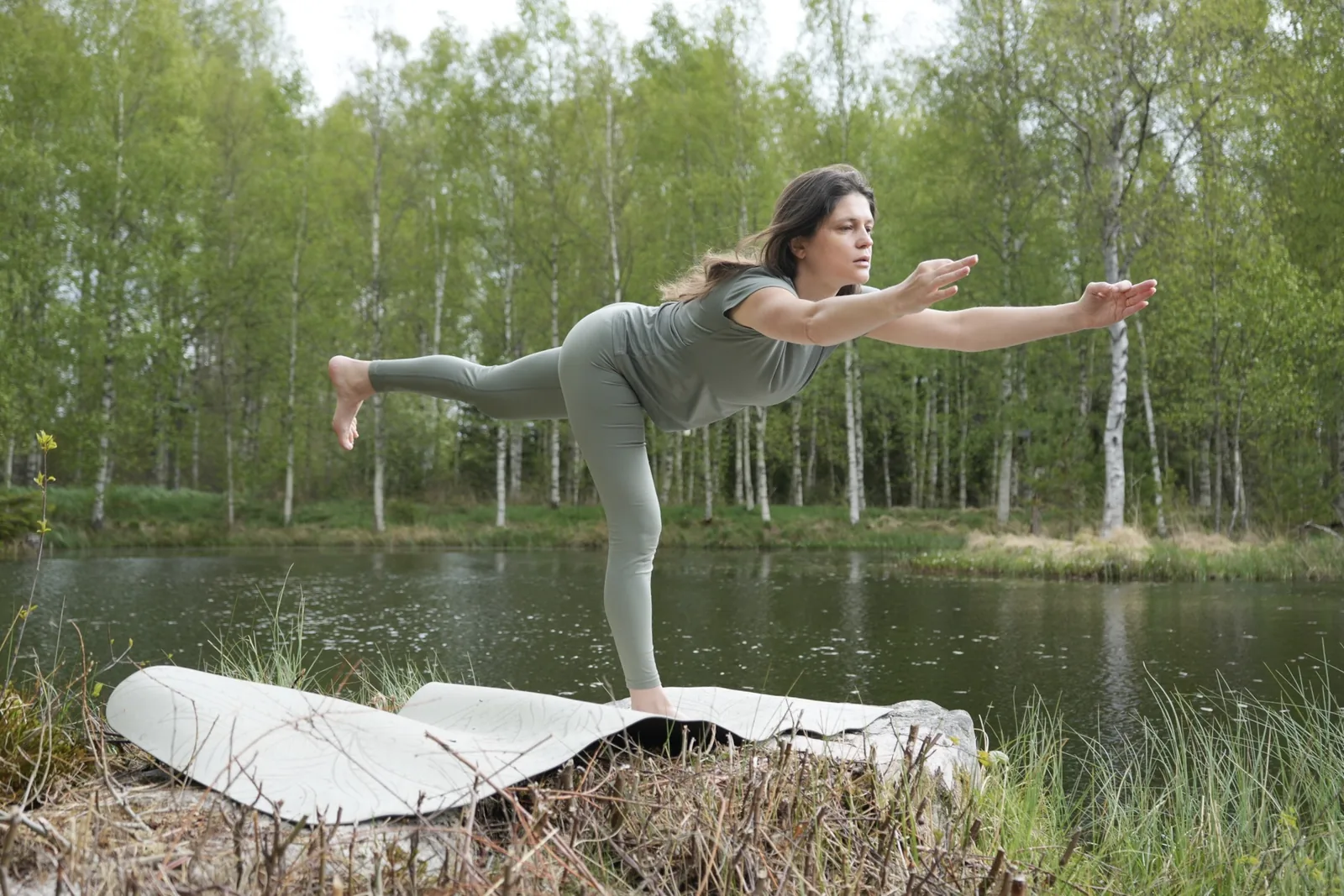
Body Awareness
Practice
Body awareness is not a skill you either have or lack. It is a capacity that develops through practice — through learning to attend to the body’s signals with precision and without immediately reacting to what you find. It is the foundation of everything else in the DYW method.
Learn to sense, feel and work with your body as a source of intelligence, not just a physical structure.
The body is always
saying something. Can you hear it?
Most people live at a significant remove from their own body. They have learned to override its signals — to push through tiredness, to eat without hunger, to perform calm while feeling activated, to move without attention. This disconnection is not laziness. It is a learned adaptation, usually developed for very good reasons.
But it comes at a cost. When you cannot feel what your body is telling you, you lose access to a layer of intelligence that is older and in some ways more accurate than thought. You cannot hear when enough is enough, when something is wrong, when the body is saying yes or no before the mind has had time to rationalise a response.
Developing body awareness is the process of rebuilding that connection — slowly, honestly, without forcing. It begins with sensation, and it extends into everything else. In Jñana Yoga — the path at the core of DeepYogaWay — this is not a separate physical skill. It is the foundation of self-inquiry: the ability to feel what is actually happening in body, emotions, mind and consciousness, rather than living inside the story the mind tells about them.
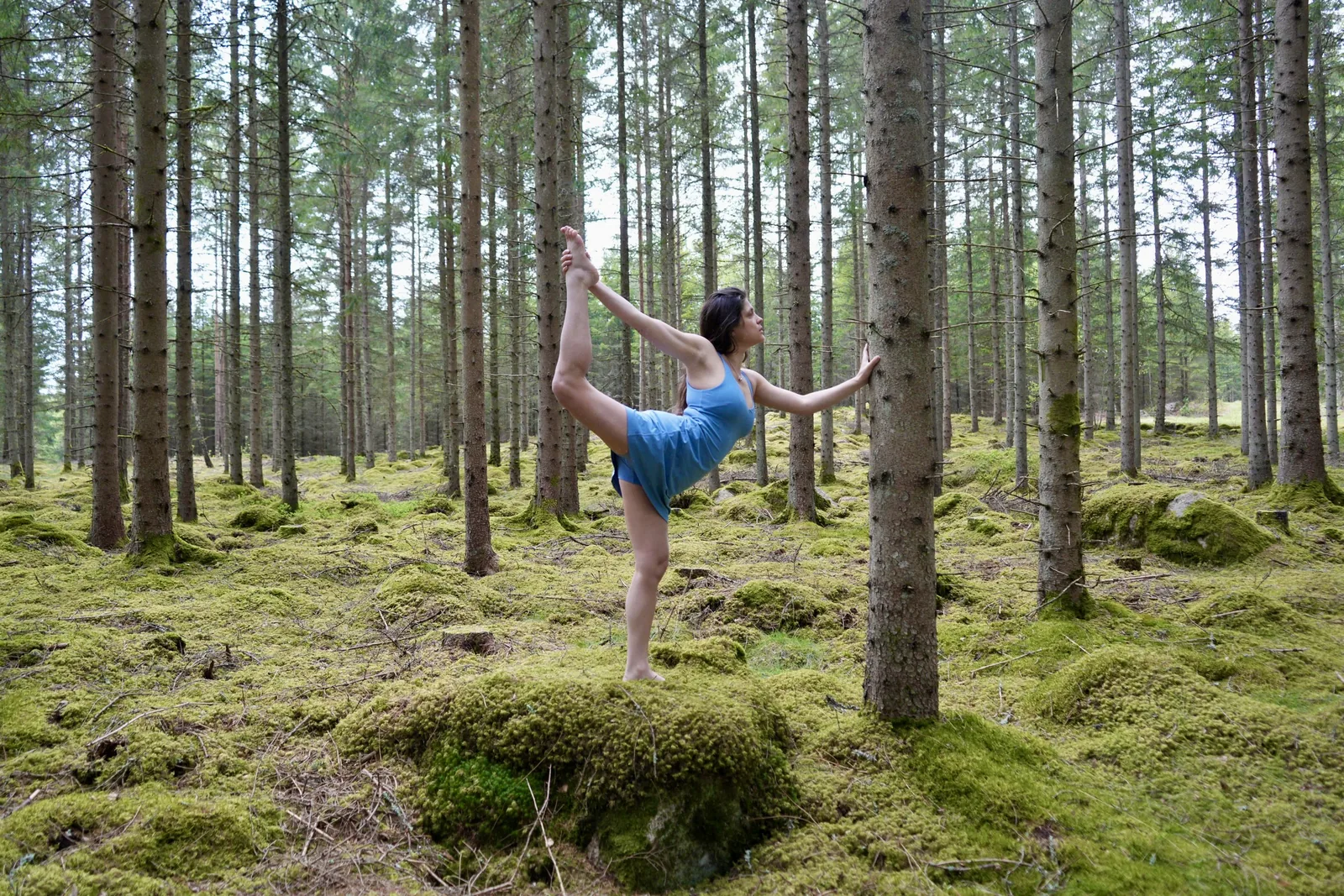
How body awareness
is developed in DYW
Learning to Feel What Is There
The first practice: simply noticing sensation. Pressure, temperature, movement, weight. Not interpreting or judging — just feeling. This sounds simple. For many people, it is the most challenging and most valuable part of the early practice.
Breath as Body Intelligence
The breath is the most accessible bridge between the conscious mind and the body’s automatic systems. Attending to the breath — its texture, rhythm, location — is both a body awareness practice in itself and the preparation for all other forms of inner attention.
Slow, Attentive Asana
Yoga postures practised slowly, with full attention on internal sensation rather than external form. The question in DYW asana practice is not “does this look right?” but “what do I actually feel?” This reorientation is one of the most significant shifts in the early practice.
Feeling Emotion in the Body
Emotions have a somatic signature — a particular location, quality and texture in the body. Learning to feel emotion in the body, rather than only in the mind, is one of the most important developments in body awareness practice.
Distinguishing Sensation From Reaction
There is a difference between the raw sensation of discomfort and the story the mind tells about that discomfort. Body awareness practice develops the ability to stay with the sensation without immediately triggering the reactive pattern — creating space between stimulus and response.
Taking Awareness Off the Mat
The goal of body awareness practice is not to become more aware during yoga sessions. It is to develop a more continuous, more honest relationship with the body throughout daily life — while working, relating, making decisions. This is what it means to live yoga rather than just practise it: real desires, real feelings, real responses, noticed in real time.

“They start understanding how they really feel, and the connection of body and emotions.”
The body is where
patterns actually live.
Milana’s formulation: “The body is the most easy way to start working with power, balance and flexibility — afterwards we can use this knowledge in other ways. The idea of the yogic approach: to connect body, emotions and mind in one harmonious system.” In DeepYogaWay this extends further — to consciousness itself. The body is the entry point, not the destination. When you can actually feel what is happening in your body, you begin to hear what your emotions are saying, what patterns are running in the mind, and what is true at a deeper level. Body awareness is the beginning of that whole journey.
What body awareness practice develops is not a skill for use on the mat. It is the capacity to know, in real time, what is actually happening in one’s own organism — the contraction that precedes a particular kind of conversation, the expansion that happens when something is genuinely right, the held breath in situations where something important is going unsaid.
Once that capacity is built, it changes everything. Not because one has learned to relax the body on command — but because the body has become a reliable source of information. “When you practice through your body, you also change how you feel. And when you work with your emotions, your body also reacts.” The connection runs in both directions. This is the foundation from which everything else in DYW develops.
Go deeper
Coming home to the body as the ground of all practice.
Tools Nervous System RegulationBody awareness as the foundation for nervous system work.
Tools Grounding PracticeUsing body awareness to restore presence and ground.
Programs Intro SessionBegin developing body awareness with Milana in person.
Begin with what is
already there.
The intro session begins with body awareness — a guided practice of attending to sensation that is also, for many people, the most significant part of the first session. 75 to 90 minutes with Milana.