Yoga for Anxiety
and Inner Restlessness
Anxiety lives in the body — in the breath, in the chest, in a nervous system that cannot settle. Working with it through the body is not a metaphor. It is the most direct path available.
Somatic yoga for anxiety — regulation through breath, body and presence.
Anxiety is not a character flaw.
It is a nervous system state.
From the perspective of somatic yoga, anxiety is not a psychological weakness or a broken way of thinking. It is the nervous system in a state of activation — a protective response that has become chronic, or that is triggered by stimuli that do not actually require that level of response.
This understanding changes the approach. If anxiety is a state, the practice can work with the state directly — not by arguing with thoughts, but by working with the body and breath that are generating and sustaining the state. Polyvagal theory describes the physiological mechanisms involved. The yoga practice offers the tools to change them.
This is not a replacement for professional psychological support where that is needed. It is a complementary practice that gives the body a direct role in its own regulation — which is something no amount of cognitive work alone can fully provide.
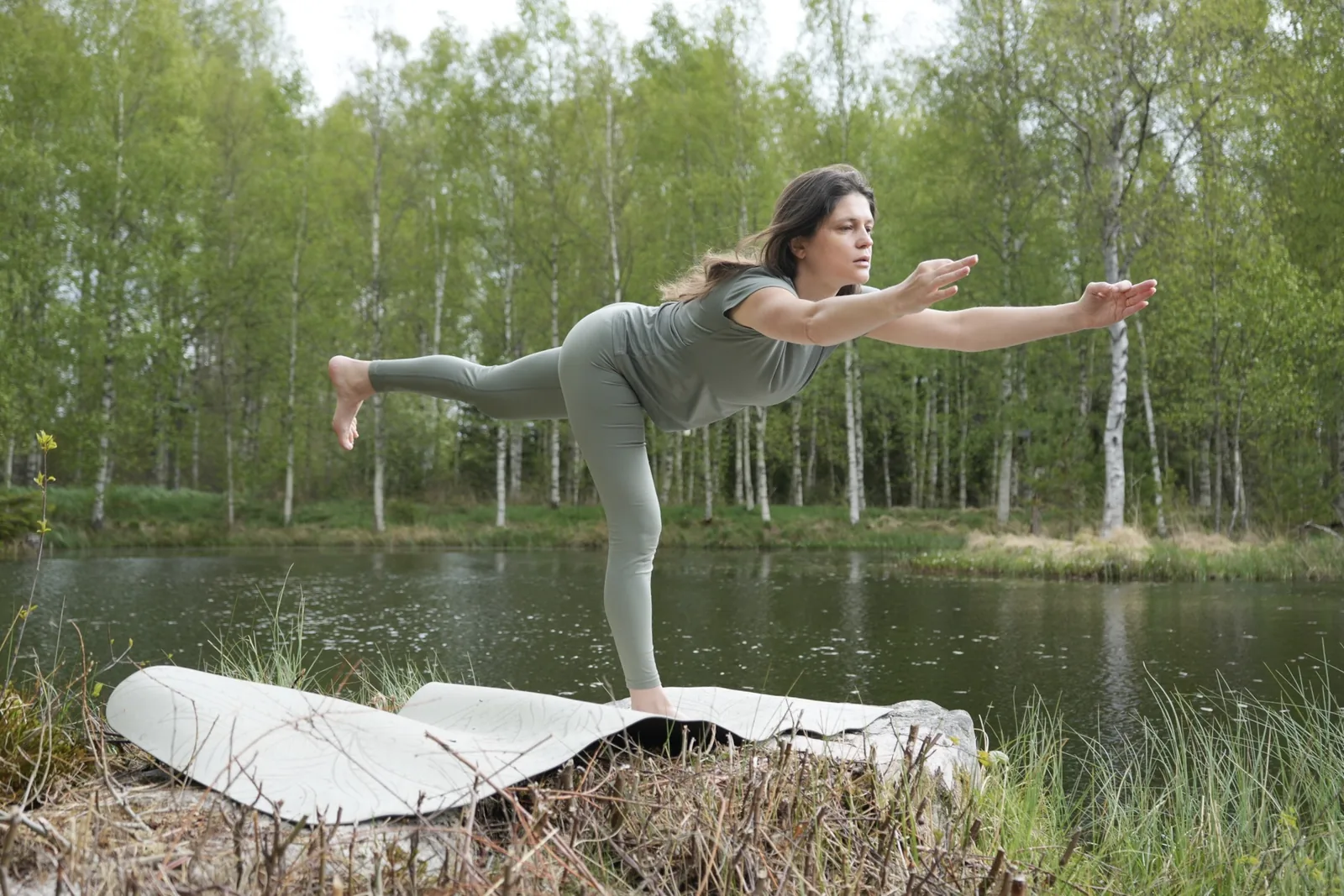
“The idea of the yogic approach: to connect body, emotions and mindset in one harmonious system.”
What somatic yoga offers
for anxiety specifically
Pranayama for Regulation
Specific breathing practices directly activate the parasympathetic nervous system. The breath is the fastest available tool for shifting out of an anxiety state — but only when the practice is right for the specific state.
Grounding Through Movement
Anxiety often pulls attention upward — into the head, into future scenarios, away from the present body. Somatic movement brings attention back into the physical body and into the present moment — where the anxiety cannot follow.
Observing Without Being Swept Away
Meditation in the DYW approach is not about emptying the mind. It is about developing the capacity to observe what is happening — including anxious thoughts — without being completely identified with it.
Deep Rest Practice
A guided practice that brings the body into complete physiological rest while a gentle thread of awareness remains. For anxious systems that struggle to truly switch off, this is often transformative.
Understanding What Triggers the State
Over time, the practice develops the capacity to notice what precedes an anxious state — what situations, thoughts or physical sensations are the early signals. This is the beginning of genuine choice.
A Nervous System That Can Settle
The long-term goal is not the elimination of anxiety — which is neither possible nor desirable. It is a nervous system that has more capacity: that can activate when needed and return to rest reliably.
Anxiety lives in the body
before it lives in the mind.
In the Yoga Sutras of Patanjali, abhinivesha — the clinging to life, the fear of annihilation — is identified as one of the five root sources of suffering. What we recognise today as anxiety is not a modern invention. It is an ancient human pattern meeting modern conditions.
What Milana consistently observes in practice: anxiety lives in the body before it lives in the mind. The chest that tightens. The breath that shortens and moves into the upper chest. The muscles along the back of the neck that never fully release. These are not the symptoms of anxiety — they are anxiety, held in tissue, waiting to be met.
Working with the body does not cure anxiety by reasoning with it. It meets anxiety where it actually lives — in the nervous system, in the breath pattern, in the chronic physical holding — and develops, over time, a different relationship with those states. Not suppression. Not management. A genuine, stable shift in what the body treats as threatening.
Deepen the work
The most direct tool for nervous system regulation.
Practice Nervous System PracticeSomatic yoga specifically for the nervous system.
Practice Meditation PracticeDeveloping the capacity to observe without being swept away.
Programs Intro SessionExperience the practice in a single session with Milana.
One session to feel
what the practice does.
The intro session gives you the full DYW structure — body, breath, nervous system, rest — in a single 75 to 90 minute session with Milana.