Nervous System
Regulation
Nervous system regulation is not about staying calm. It is about developing a nervous system flexible enough to meet difficulty without getting stuck — one that can activate when needed and return to rest reliably. Here are the practical tools the DYW method uses.
Practical tools for nervous system regulation through yoga, breath and somatic practice.
Three states.
One goal: flexibility between them.
Polyvagal theory, developed by Stephen Porges, describes three states of the autonomic nervous system: the ventral vagal state (safe and social, calm and connected), the sympathetic state (mobilised, activated, fight-or-flight) and the dorsal vagal state (shutdown, disconnection, freeze).
A regulated nervous system is not one that stays permanently in the ventral vagal state. It is one that can move between states fluidly — activating when the situation requires it, and returning to rest and connection when the demand has passed. What the DYW practice builds is this flexibility.
The classical yoga tradition mapped similar territory through different language — the gunas, prana flow, the relationship between ida and pingala. Both frameworks point to the same practical reality: that the body’s regulatory systems can be trained, and that this training changes how you live. In the DeepYogaWay method, rooted in Jñana Yoga, nervous system regulation is not the destination — it is the ground. A settled, regulated nervous system is what makes genuine self-inquiry possible: the ability to feel what is actually happening in body, emotions, mind and consciousness, without being pulled immediately into reactivity.
Practical regulation tools
from the DYW method
Extended Exhalation
The single most reliable tool for shifting from sympathetic activation toward parasympathetic rest. Exhale longer than you inhale. Start with 4 counts in, 6 out. Extend as capacity develops. Can be used anywhere, at any time.
Somatic Grounding
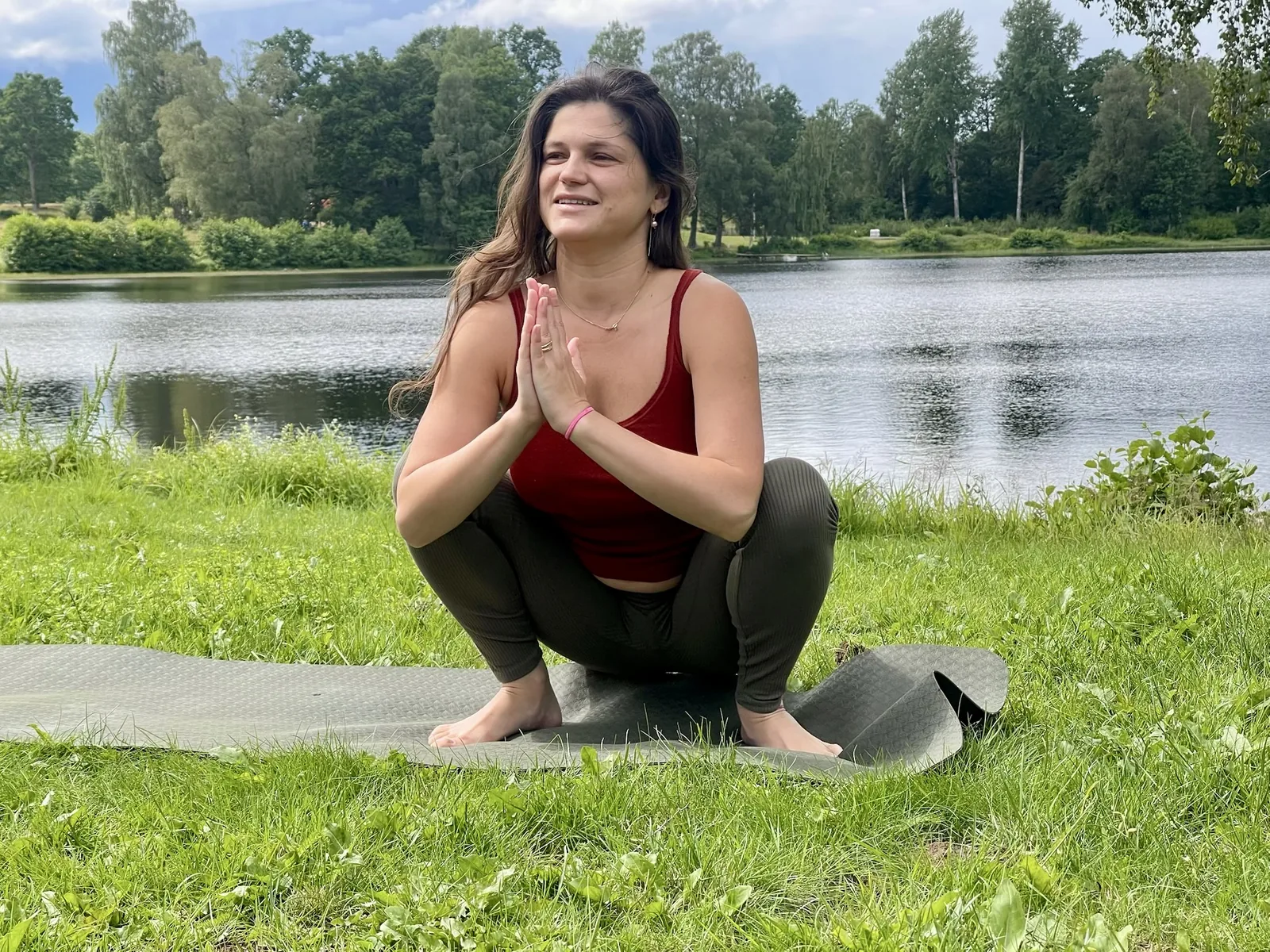
Pressing the feet into the floor. Feeling the weight of the body against the earth. Slow, deliberate movement that draws attention into physical sensation and out of the narrative loop of the mind. Grounding is the first intervention for activation.
Shaking and Discharge
Voluntary trembling or shaking releases accumulated activation from the nervous system — the same mechanism that animals use spontaneously after a threat has passed. In the DYW practice, specific movement sequences create conditions for this natural discharge.
Deep Rest Practice
A guided practice that brings the nervous system into a state of complete physiological rest with a thread of awareness maintained throughout — deeper than ordinary relaxation, without full sleep. Particularly valuable for chronically activated systems that have lost access to genuine rest.
Co-Regulation
The nervous system regulates partly through contact with regulated others. The DYW group practice is itself a co-regulation tool — practising in the presence of a calm, grounded teacher and a group of committed practitioners creates conditions for nervous system settling that solo practice alone cannot produce.
State Tracking
Learning to notice your own nervous system state in real time — to feel the early signs of activation before they tip into overwhelm. This is not a technique but a capacity, built through consistent practice of inner attention.
“The idea of the yogic approach: to connect body, emotions, mind and consciousness in one harmonious system.”
What consistent practice
builds in the body.
Nervous system regulation is not a skill you learn and then have. It is a capacity that is built through consistent practice over time. The polyvagal understanding identifies three states of the autonomic nervous system: ventral vagal (safe, connected, regulated), sympathetic (mobilized, activated), and dorsal vagal (collapsed, shut down). The capacity to return to the regulated state from activation or collapse — that is what regulation means.
What the DYW practice builds, over weeks and months, is an expanded window of tolerance: a nervous system that can handle more of what life brings without losing access to its own ground. Not because stress is removed, but because the system has practised returning from it — again and again, in a structured container, with a skilled teacher who can read what is happening in the room.
The change is not psychological. It is physiological. And it is stable. This is what Milana means by “stable and permanent result.” Not a mood, not a technique applied in a difficult moment. A different baseline. A nervous system that has genuinely reorganised around a more regulated way of being — because it has practised that, consistently, until it became natural.
And from that baseline, something else becomes possible. When the body is no longer locked in chronic activation or shutdown, awareness can move more freely — into emotions, into real desires, into the questions that matter. This is how nervous system work connects to the deeper inquiry at the heart of the DYW method: a regulated system is not the goal. It is the ground from which a conscious, aligned life can be built.
Go deeper
The full explanation of the nervous system pillar in DYW.
Tools Breathwork ToolsThe breath techniques used for nervous system regulation.
Life Challenges Yoga for StressRegulation in the context of chronic stress and overwhelm.
Programs Intro SessionExperience nervous system regulation in practice with Milana.
Feel the difference
in your own nervous system.
The intro session is a first experience of somatic yoga in full — including the breath and movement tools that work directly with the nervous system. 75 to 90 minutes with Milana.