
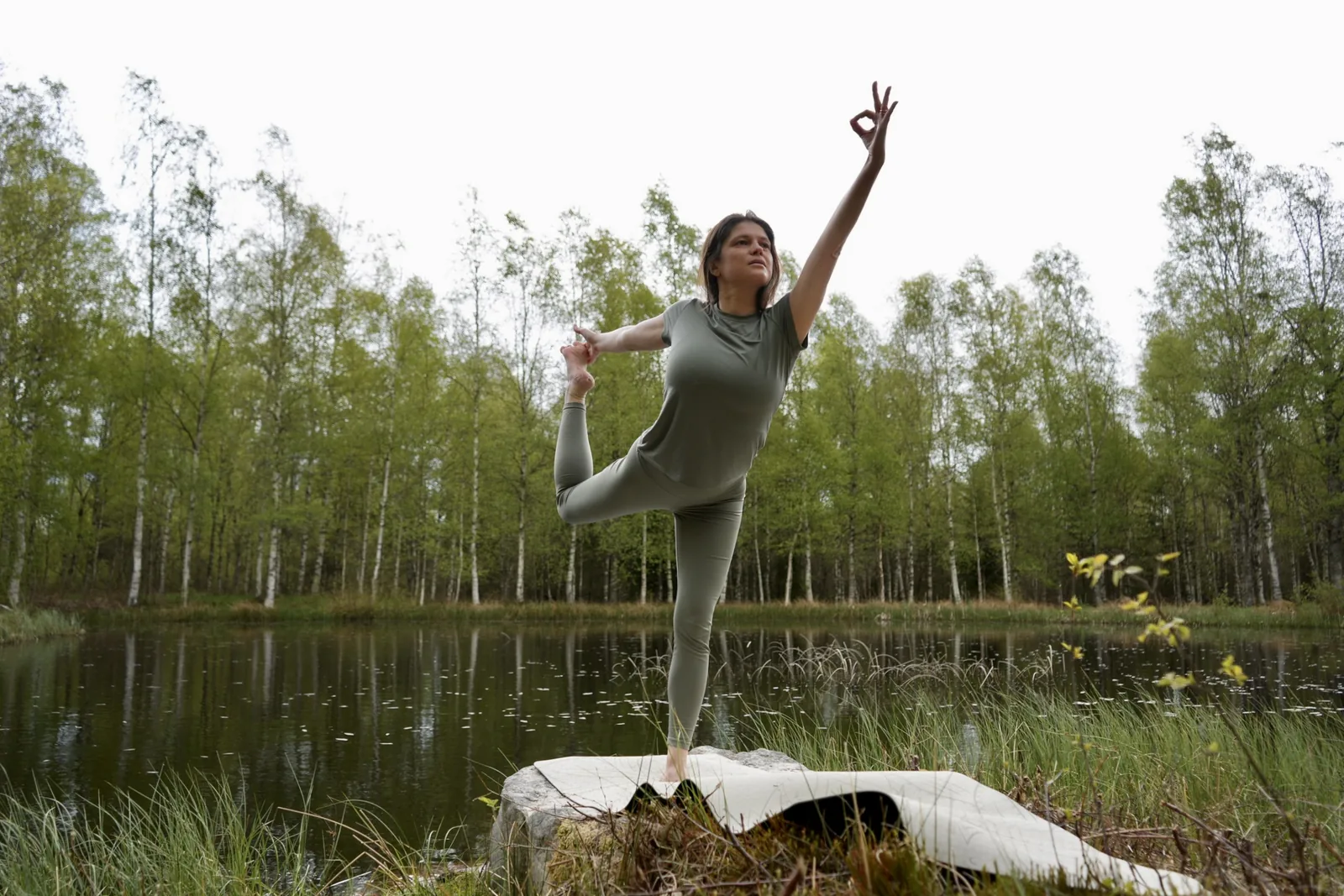
Yoga for
Emotional Balance
Emotions do not live in the mind — they live in the body. Working with emotional balance through somatic yoga means going to where the emotions actually are, and developing a different relationship with them from the inside.
Somatic yoga for emotional regulation, resilience and greater inner balance.
Emotions arrive in the body
before they reach the mind.
Before you have a name for what you are feeling, you have a sensation. A tightness in the chest. A heaviness in the stomach. A current of energy you cannot quite identify. Emotions are bodily events first — and only become thoughts, stories or labels afterwards.
This matters because it means that working with emotions at the level of thought — analysing, reframing, understanding — only reaches them after they have already happened. Somatic yoga works at an earlier level: at the level of the sensation itself, before the story forms.
This is not a rejection of cognitive work. It is a complement to it — and for many people, it is the missing piece. The part of themselves they have been trying to reach with the mind, that the body can actually access.
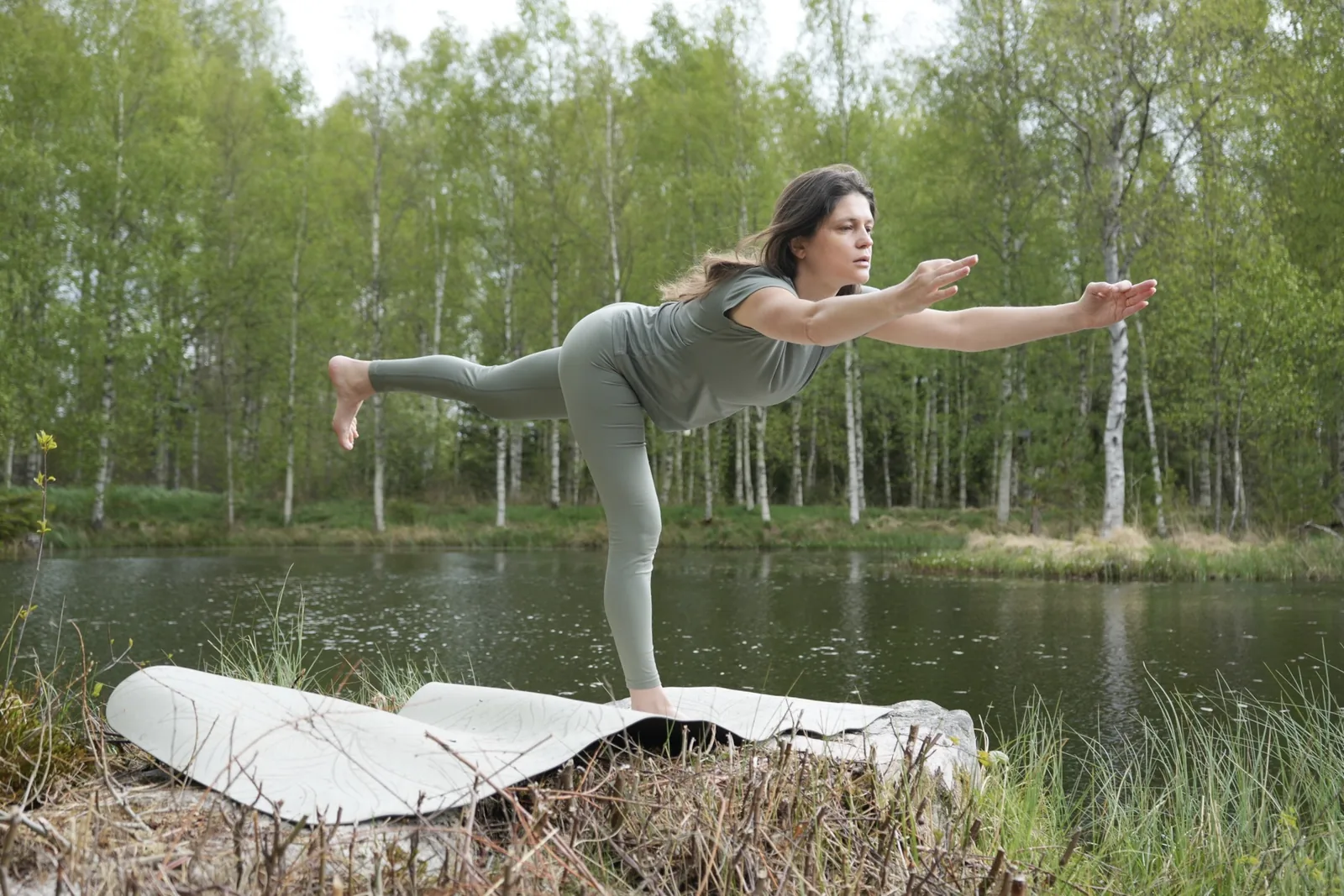

“In the body we can feel blocks, restrictions and emotions. The idea of the yogic approach: to connect body, emotions and mindset in one harmonious system.”
Emotional balance is not
the absence of strong emotions.
It is the capacity to feel strongly without being swept away. To move through difficult emotional states without being defined by them. To return to equilibrium without having to suppress what is real.
Learning to Feel Without Reacting
The first skill: the ability to feel an emotional state in the body without immediately reacting to it. This is the foundation of emotional intelligence — and it is a capacity built through somatic practice.
Nervous System Flexibility
Emotional dysregulation is often nervous system dysregulation. Breathwork and somatic practice develop the nervous system’s capacity to move between states without getting stuck — in activation or in shutdown.
Working With Held Emotion
Emotions that have been suppressed or avoided over time accumulate in the body as held tension. The practice creates conditions for these to surface and move — not through force, but through sustained, honest attention.
Seeing the Pattern Before It Runs
Over time, the practice develops the ability to notice emotional patterns earlier — to see the beginning of a familiar reaction before it has fully taken hold. This is the beginning of genuine choice.
Coming Back to Centre
Perhaps the most important development: learning to return. Not to avoid being moved — but to know, through practice, how to come back to your own centre after strong emotion has passed through.
Emotions as Information
Strong emotions are not problems to be solved. They are signals — about what matters, what is needed, what the situation is asking. The practice develops the capacity to hear that information rather than being overwhelmed by it.
The body stores
emotional patterns as physical facts.
Milana’s formulation is simple and precise: “In the body we can feel blocks, restrictions and emotions.” Emotional balance, in the DYW understanding, is not the absence of strong feeling. It is the capacity to have a feeling without being swept away by it — and to stay with what is true rather than defaulting to a habitual response.
The body stores emotional patterns in specific, observable ways. Chronic tension in the jaw and shoulders. A breath that moves primarily in the upper chest and never settles into the abdomen. A held quality in the hips. Loss of contact with the lower body entirely. These are not psychological metaphors. They are physical facts that show up in how a person moves, breathes, and holds themselves in a room.
The practice works with these patterns directly — not by processing emotions through conversation, but by meeting them in the body where they actually live. Over time, the charge that was held in those patterns releases. What replaces it is not a neutral void but a more genuine relationship with what one actually feels — and the capacity to choose what to do with that, rather than being run by it.
Deepen the work
Coming home to the body — the foundation for emotional intelligence.
Practice Nervous System PracticeRegulation and resilience through somatic yoga.
Practice Meditation PracticeObserving emotion without being swept away by it.
Programs Intro SessionExperience the practice in a single session with Milana.
Begin where you are.
The intro session is 75 to 90 minutes — a first experience of the practice and what it works with. No prior experience needed. Just a genuine desire to go deeper.