

Intention Setting
Intention in yoga is not a goal and it is not a wish. In the DYW practice, intention — or sankalpa, as it is named in the yogic tradition — is a felt direction: something planted in the deep layers of the mind during a state of genuine inner quiet, and allowed to grow without forcing.
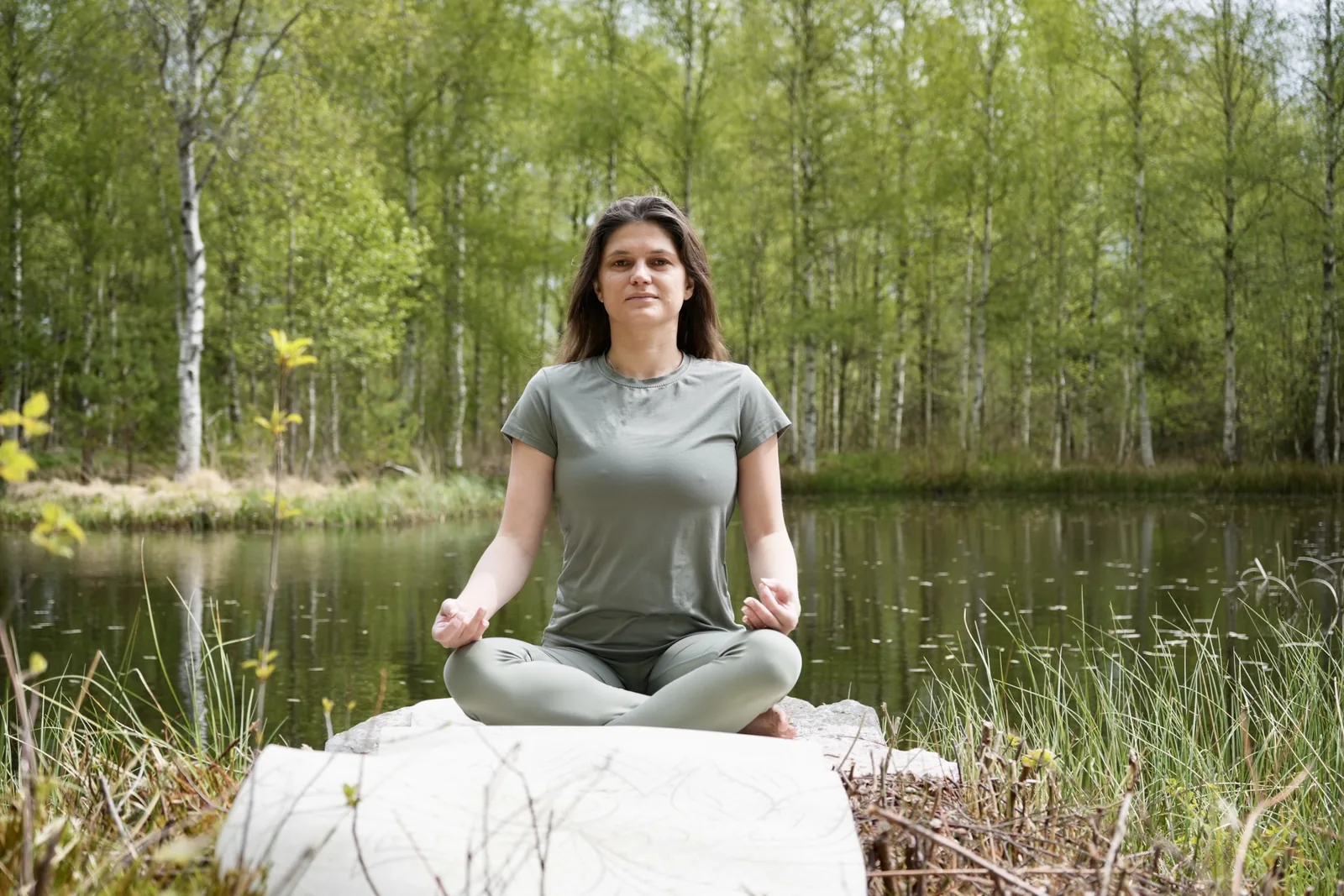
Intention setting in yoga practice — somatic, directional, and rooted in the body rather than the wishful mind.
Not wishful thinking.
A seed planted in real ground.
The wellness industry has largely turned intention setting into a positivity exercise — writing down what you want and visualising it into existence. This is not what sankalpa means in the yogic tradition, and it is not what DYW works with.
In the traditional understanding, a sankalpa is a resolve — a statement of direction that arises from a state of genuine inner quiet and reflects something real about who you are and what you are moving toward. It is planted during the guided deep rest that closes each DYW session — a state between waking and sleep where the mind becomes genuinely receptive and the usual defensive filters are relaxed.
The difference between a wish and an intention: a wish is generated by the ego and shaped by social desire. An intention arises from something deeper — and you feel the difference in the body when you have found one that is genuinely yours. In Jñana Yoga, this capacity to distinguish between conditioned wanting and real desire is one of the central developments of practice. Not what you think you should want. What you actually want, when the noise is quiet enough to hear.
How intention setting
works in the DYW method
Creating the Conditions
An intention cannot be forced or manufactured. It requires conditions: a body that is settled, a breath that is slow, a mind that has released enough of its habitual activity to become genuinely receptive. The practice creates these conditions before intention is asked for.
Finding the Resolve
In the deep rest practice that closes each session, the sankalpa is planted twice — once at the beginning of the practice, before the body has entered deep rest, and once at the end, as the body is returning. This repetition is not affirmation. It is the act of placing something real in the ground of the subconscious.
What a Good Intention Feels Like
A genuine intention has a felt quality — a sense of recognition, of “yes, that is actually it.” It often surprises you. It is rarely the most obvious or the most comfortable thing. When you have found it, you know in the body before the mind can confirm it.
Beginning of Practice
At the start of a session, setting an intention — a single, simple orientation for the practice — gives the body and mind a direction to move in. Not a goal to achieve. A quality to cultivate: ease, honesty, courage, presence.
Keeping the Same Intention
In the yogic tradition, a sankalpa is kept for as long as it takes to manifest — sometimes years. The practice is not to constantly find new intentions, but to return to the same one with deepening honesty and commitment, until it has become real in the life.
Carrying the Intention Off the Mat
An intention planted in practice must be lived in daily life. This is the final stage — noticing where the intention is relevant in ordinary situations, and choosing to act from it rather than from habit.

“Yoga is not about achieving and cool asanas. It is about your process and real desires.”
Not a goal.
A seed planted in the body.
The sankalpa — the seed of intention planted in deep rest practice — is not a goal. Goals live in the mind. A sankalpa lives in the body and the unconscious. It is planted in the hypnagogic state, when the boundary between waking and sleep is thin and the conscious mind’s resistance is reduced. In this state, a clear, simple intention reaches somewhere deeper than ordinary decision-making can access.
The DYW understanding of intention is distinct from goal-setting culture. Goal-setting asks: what do I want to achieve? Intention asks: what is actually true for me? The first is cognitive. The second is felt. And the capacity to feel the difference between an intention that comes from inside and one that comes from external pressure — that is itself one of the significant developments of sustained practice.
Milana’s core line — “You will really feel inside when you have found a true answer” — describes exactly this. Not a reasoned conclusion. A felt certainty. The intention that lands in that space is not a programme. It is a direction. And a direction held in the body, practised consistently, tends to go somewhere real. This is what inner alignment means in the DeepYogaWay practice: not external success, but a life lived increasingly from one’s own actual values, desires and consciousness — brought into everyday decisions, relationships and how one meets the world.
Go deeper
The practice where sankalpa is most powerfully planted.
Practice Meditation PracticeDeveloping the inner quiet in which intention becomes clear.
Life Challenges Finding DirectionIntention setting in the context of life purpose and direction.
Programs Intro SessionBegin working with intention in practice with Milana.
Find the intention
that is genuinely yours.
The intro session includes deep rest practice — the practice in which intention is planted most deeply. You will be guided toward your own sankalpa in the session itself.