

Yoga for Relationships
and Boundaries
How you relate to others is an expression of how you relate to yourself. Somatic yoga develops the inner ground from which clearer, more honest and more conscious relationships become possible — not through communication techniques, but through embodied change.
Embodied boundaries, conscious relating, and the body as the foundation for healthier relationships.
Boundaries are not rules.
They are felt in the body.
Most of us have learned about boundaries as a concept — something we should have, something healthy people communicate clearly. And yet knowing what a boundary is does not make it easy to hold one when you are actually in the situation.
This is because boundaries are not primarily cognitive. They are somatic. They are felt in the body before they are articulated in words: as a constriction in the chest, a pull away from something, a felt sense of “yes” or “no” that exists beneath the layer of social training and learned responses.
Developing embodied boundaries — the kind that hold not because you have memorised a script, but because you can actually feel what is true — is the work of somatic practice. And it changes how you relate, not just how you communicate.
But embodied boundaries are not the whole of the relational work. What the body also begins to reveal, in the presence of another person, is something that solitude rarely surfaces: the patterns, reactions and assumptions we carry without knowing it. Another person — particularly one we feel strongly about — tends to activate things in us that ordinary life keeps quiet. The quality of attention that somatic practice develops is not only useful for knowing your own limits. It is also how you begin to recognise what those activations are actually about.
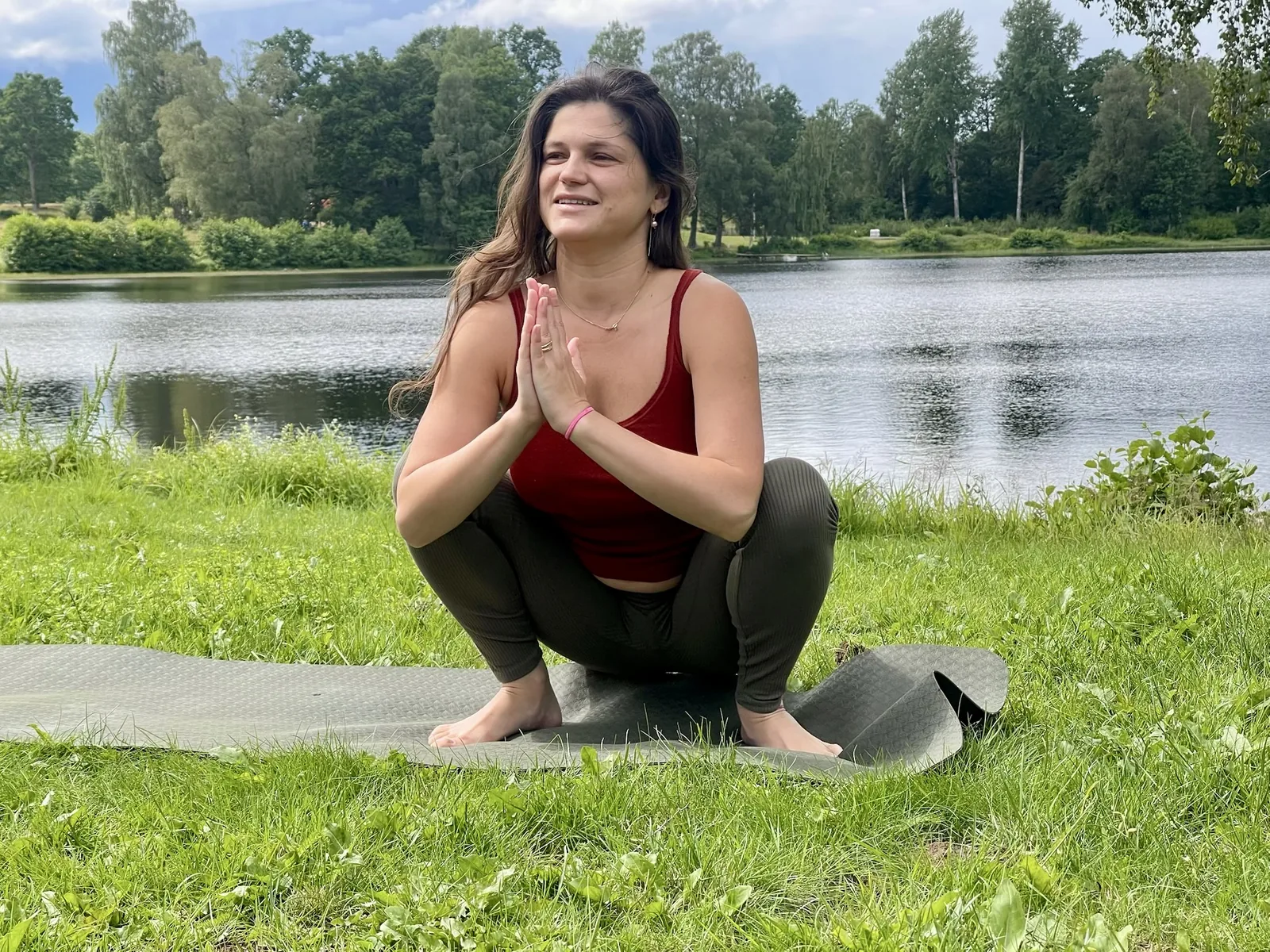

“People feel more empowered, excited, curious about life. Live on a deeper level, with more presence and awareness.”
How somatic practice changes
the way you relate
Knowing How You Actually Feel
Honest relating begins with honest self-knowledge. The practice develops the capacity to know how you actually feel in a situation — not how you think you should feel, or how you have learned to respond.
Not Reacting From a Triggered State
Many relational difficulties are nervous system problems. When we are activated — threatened, overwhelmed or flooded — we cannot access our clearest, most generous selves. The practice builds the capacity to regulate before responding.
Being Actually Here With Another Person
Genuine connection requires genuine presence — the ability to be with another person without your attention being primarily elsewhere. This is a capacity built through practice, not through trying harder to be present.
Feeling the No Before Speaking It
When boundaries are embodied, they do not require negotiation or explanation — they are simply felt, and then communicated from that felt certainty. The practice builds access to the felt sense that makes clear communication possible.
Seeing Your Own Relational Patterns
The way we relate to others repeats patterns that were established early. Somatic practice makes these patterns visible — not through analysis, but through direct experience of how they show up in the body in real time.
Practising With Others
The group practice is itself a relational laboratory — a safe context for practising presence, noticing reactions, and developing the capacity to be genuinely seen by others. Relating consciously in the group translates directly into relating more consciously in life.
The body does not lie.
Social training does.
One of the most consistent things Milana sees in practice is this: when people first begin to slow down and actually feel themselves, they discover that their body has been saying something for years that their mind has been overriding. A contraction in the chest when someone asks for something unreasonable. A heaviness in the stomach before a decision that is not actually right. A held breath in conversations where something important is going unsaid.
The body knew. The person was not listening.
This is not mysticism. It is the result of a nervous system that has learned, through years of social and family training, to prioritise what is expected over what is actually true. Yoga practice develops the capacity to hear the body again — not as a rebellion against relationship, but as the foundation for ones that are real. A boundary that is felt in the body before it is spoken is not aggressive. It is honest. And it is much easier to hold.
At DeepYogaWay, relational work begins here — not with communication models, but with the much simpler and harder question: what do you actually feel right now? And can you trust it?
This extends to what happens in relationships more broadly. Jealousy, conflict avoidance, the impulse to withdraw when things become uncomfortable, the need to be needed beyond what is actually sustainable — these are not relational failures. They are patterns that have a history, and they do not change through better communication alone. What tends to change them is the same attention the practice develops in any other area: the capacity to feel what is actually happening in you, before you act on it. Relationships are among the most consistent teachers in that process. Not because they are comfortable, but because they reveal what nothing else does.
Relationships as a path
to self-knowledge.
The DYW group practice is not just a context in which yoga happens. It is itself a relational practice. The same people, week after week, in the same room, doing the same honest work together. Over months, the group becomes a mirror — not a comfortable one, but a precise one. The patterns that show up in your closest relationships will eventually show up here too.
How do you respond when someone takes more space than you feel is right? Do you withdraw when the work becomes vulnerable? Do you give more than is sustainable and then feel resentful? Do you need to be seen to feel safe? These are not problems to solve intellectually. They are patterns to be met — slowly, with practice, with real other people present.
In the DYW group, relating consciously — noticing reactions, staying present with discomfort, learning to be genuinely seen without performing — is understood as part of the path, not a side effect. What you develop in the group, you carry into your relationships outside it. This is what Milana means when she says the group becomes friends on the spiritual path. It is not sentimentality. It is a precise description of what years of honest practice together actually produces.
Deepen the work
Coming home to the body — the foundation for embodied boundaries.
Programs Group PracticePractising conscious relating within a small, safe community.
Practice Nervous System PracticeThe regulation that makes genuine presence possible.
Programs Intro SessionExperience the practice in a single session with Milana.
The relationship with yourself
changes everything else.
The intro session is where the work begins — 75 to 90 minutes with Milana to experience the practice and understand what it offers.