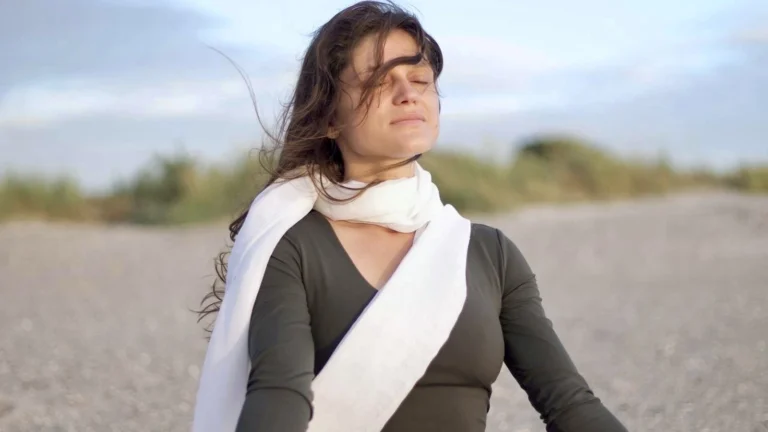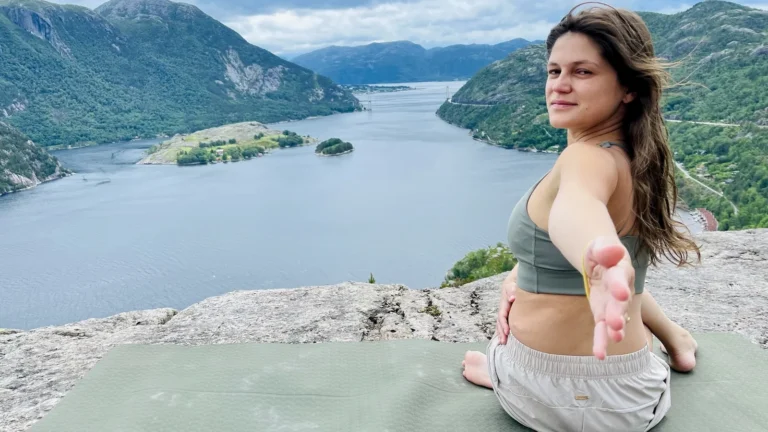
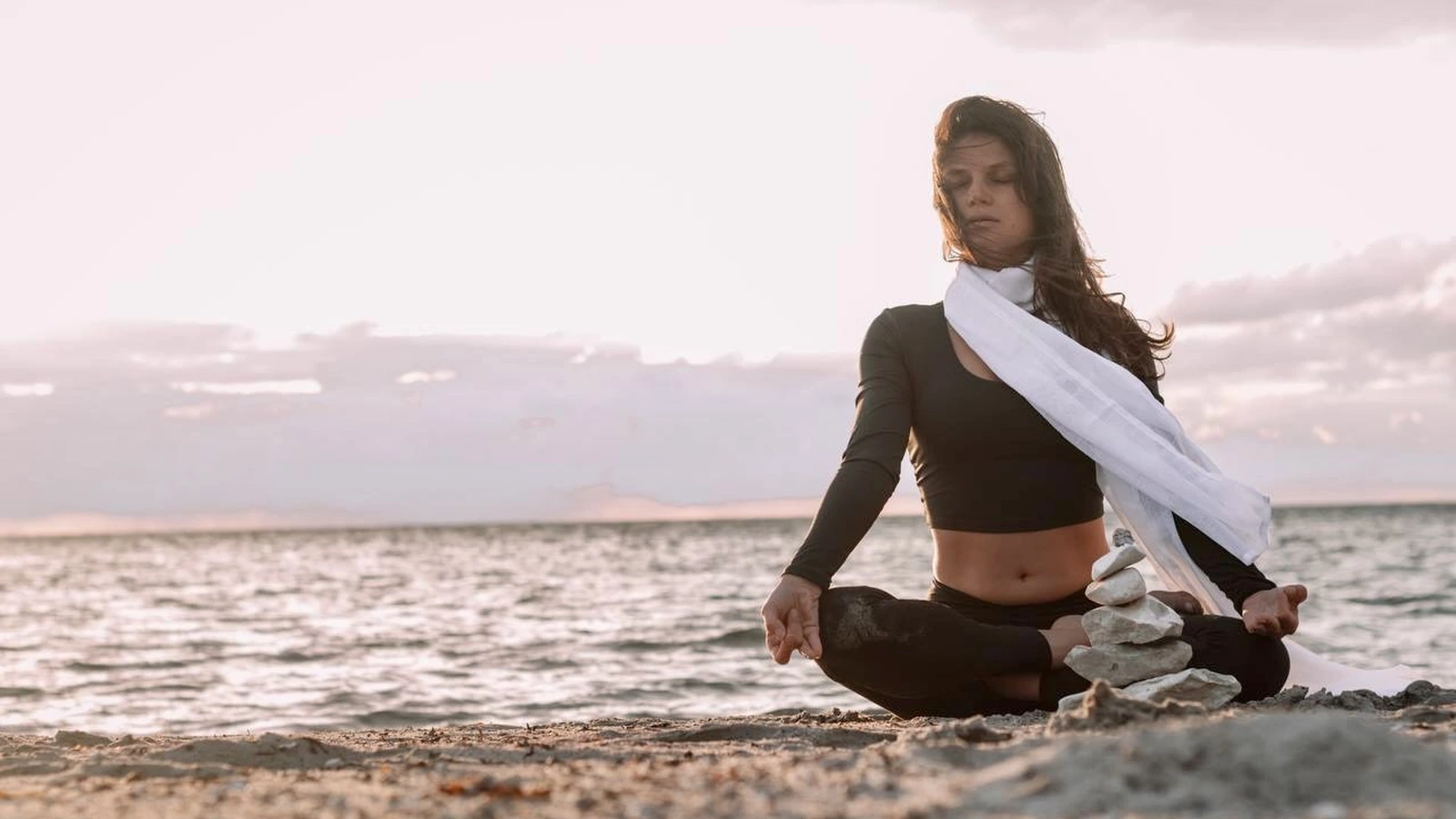
Before we can go deep — into meditation, into emotional presence, into real self-knowledge — the nervous system must feel safe enough to let us.
This is not a soft observation. It is a physiological fact.
When the nervous system is in a state of threat or dysregulation, the body’s resources are directed toward survival. The higher cognitive functions — the capacity for reflection, for subtle sensation, for emotional nuance — become less accessible. The body closes down. The mind narrows. What was open and available a moment ago is suddenly unreachable.
This is not weakness. This is biology doing exactly what it evolved to do.
What we mean by the nervous system
The nervous system is the body’s communication network — the system through which sensory information is received, processed and responded to. It governs not only movement and sensation, but emotional tone, stress response, sleep, digestion and our capacity to feel safe in our own body.
Most relevant to yoga practice is the autonomic nervous system: the branch that operates largely below conscious awareness and regulates the body’s internal state. Within it, the familiar polyvagal divisions — the sympathetic (mobilisation, activation) and the parasympathetic (rest, restoration, connection) — shape how we meet each moment.
When the sympathetic system is chronically active — as it is for many people in modern life — the body is perpetually ready for threat, even in the absence of actual danger. The shoulders tighten. The breath shallows. The jaw clenches. The mind races. The capacity for depth, for stillness, for genuine inner contact, diminishes.
Nervous system yoga begins with the recognition that this is the starting point for most people who walk through the door.
Why this matters for practice
A yoga class that ignores nervous system regulation is working on the surface. Poses are shapes. Breath is mechanical. Meditation is effortful. The experience may be pleasant — even very pleasant — but it does not reach the depth from which lasting change becomes possible.
The DeepYogaWay method is built on a different premise: that the nervous system must be worked with, not worked around. That regulation is not a preparation for practice — it is the practice.
This means that each session begins with genuine arrival. Not a few minutes of half-hearted settling, but a real, attentive process of coming into the body. Feeling the ground. Noticing the breath. Meeting whatever is present, without rushing to the next thing.
From that foundation, deeper work becomes possible. The body opens. The breath deepens naturally. Meditation is not a struggle against distraction — it is a settling into what is already there.
How yoga regulates the nervous system
Several elements of yoga practice directly influence nervous system state:
Breath is perhaps the most powerful tool available. The breath is unique among autonomic processes in that it can be brought under conscious control. Slow, extended exhalation activates the parasympathetic system. Specific pranayama practices can shift nervous system state within minutes. This is not metaphor — it is measurable physiology.
Body awareness — the practice of attending to sensation without immediately reacting to it — trains the capacity to tolerate a wider range of internal states. Over time, what once felt overwhelming becomes workable. The window of tolerance expands.
Rhythm and predictability reduce the nervous system’s need for vigilance. When the body knows what is coming — the same space, the same people, the same arc of practice — it can relax its watchfulness. This is one reason why ongoing weekly group practice is so much more effective than drop-in classes: the repetition itself is regulating.
Relational safety — the experience of being with others who are also engaged in honest, attentive practice — provides co-regulation. We regulate each other, through presence, through shared rhythm, through the field that develops in a group that has practiced together over time.
Working with dysregulation
One of the most important things that nervous system yoga teaches is the capacity to recognise one’s own states — and to work with them, rather than fighting or suppressing them.
When activation arises in practice — tightness, agitation, the impulse to flee — the instruction is not to override it. The instruction is to meet it. To bring attention to it. To stay present with it long enough for the body’s own wisdom to respond.
This is the practice of regulation. Not the imposition of calm from the outside, but the cultivation of the capacity to return to equilibrium from within.
Over time — and it does take time — this capacity becomes available off the mat as well. The practitioner begins to notice their nervous system states earlier, to have more choice in how they respond, to recover more quickly from activation.
The foundation beneath everything
Nervous system regulation is not a specialisation within yoga. It is the foundation beneath all of it.
Without it, the body cannot truly open. The breath cannot fully reach. Meditation cannot penetrate beneath the surface. Emotional material cannot be met with steadiness. The integration of practice into daily life — which is the whole point — cannot happen.
With it, everything becomes possible. The asana practice carries intelligence. The breath does real work. Stillness is not fought for but arrived at. The group field develops depth.
This is why the nervous system is one of the pillars of the DeepYogaWay method. Not as a supplement to yoga, but as its ground. And a regulated nervous system is not the end point — it is what makes the deeper work possible. In Jñana Yoga, the path of self-inquiry at the heart of DeepYogaWay, genuine inner investigation requires exactly this: a body settled enough to feel what is actually there, rather than what the activated nervous system insists upon.
If you are interested in practicing in this way — with full attention to the body’s actual state, rather than its performance — we would love to hear from you.